Back in the CFR: ED Issues a "Final Rule" Restoring 2020 Title IX
On September 28, 2026, the Department of Education announced a final rule removing the 2024 Title IX regulations and restoring the 2020 rule to the CFR. Does it actually change anything? Nope.
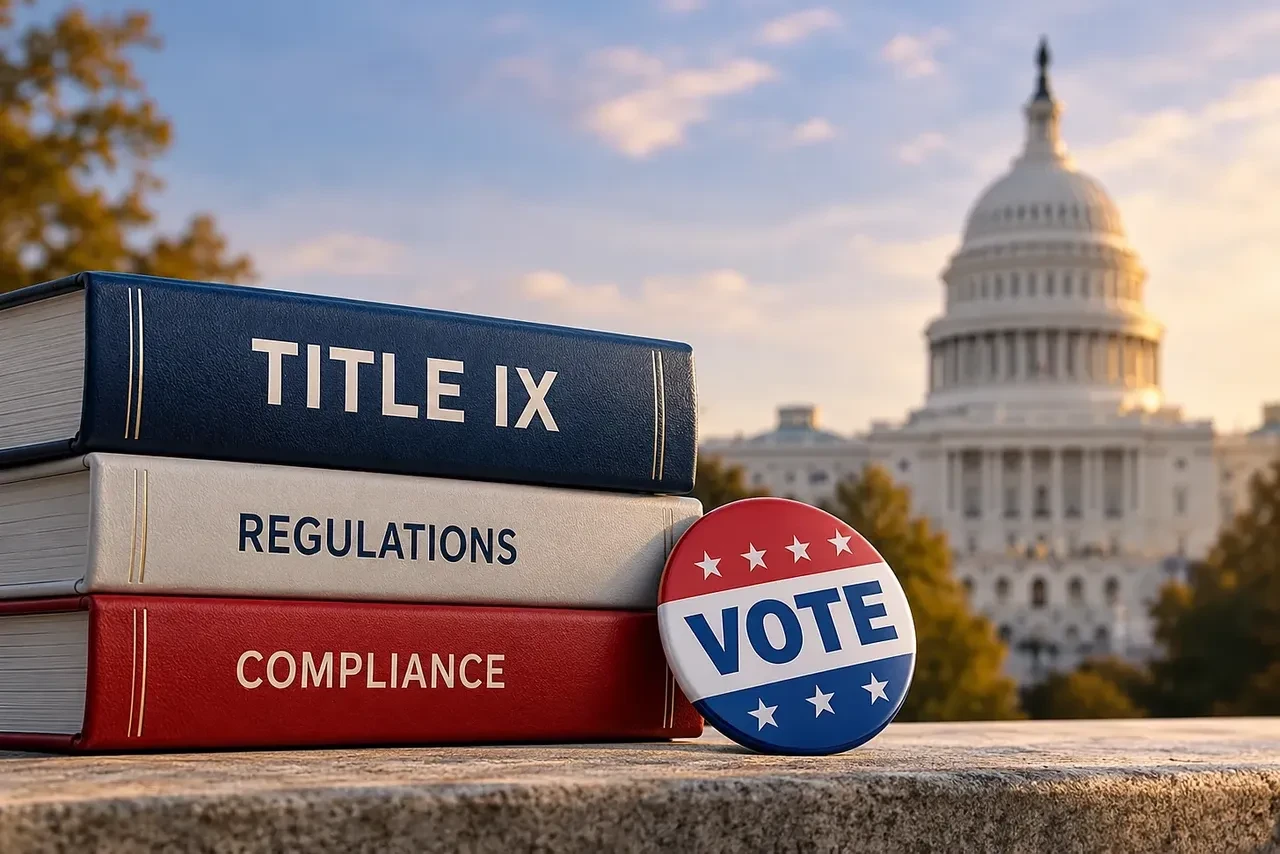
On September 28, 2026, the U.S. Department of Education announced it would publish a final rule removing the Biden administration’s 2024 Title IX regulations from the Code of Federal Regulations and restoring the 2020 regulations to the CFR. Other than getting one of my favorite Beatles songs stuck in my head for the day (now you can’t unhear it either, right?!), does this “final rule” really do anything? Nope.
Although it will provide some clarity by making it easier to use the CFR to look up the Title IX regulatory language, the rule doesn’t require any changes unless you have been living under a Title IX rock since before the Trump administration took office in January 2025. So, to keep the British theme going, keep calm and carry on with your Title IX work; there’s nothing to see here.
Aren’t We Already Using the 2020 Rule?
Why yes, yes we are. As I reported on the blog back on January 9, 2025—before Donald Trump took office for the second time—a federal court vacated the 2024 Title IX rule, which “mean[t] the end of the 2024 Rule everywhere.” And in an OCR resource issued on January 14, 2026, the Biden administration recognized the impact of the vacatur and stated that “the 2024 Title IX regulations are not effective in any jurisdiction.” That means all schools, colleges, and universities across the country have been using the 2020 rule for over a year and a half.
Even the final rule repeatedly describes itself as essentially engaging in administrative cleanup, saying it “effects no change of current substantive law” because the Department has been enforcing the 2020 framework since early 2025.
So What Is This All About?
The Department’s press release notes that “federal courts dismissed all remaining litigation concerning the Biden-era regulations last month,” which it says “cleared the way for the Trump administration to issue today’s final regulation restoring previous regulatory text.” The rule also explains that the update makes four minor changes to the regulatory text. The most substantive is removing language saying that a witness’s out-of-hearing statements could not be relied on if they did not testify at a Title IX hearing, which a Federal court vacated in 2021. The others relate to cross-references and adjustment periods made obsolete by regulatory changes and time; for instance, removing a requirement that schools receiving federal funds assess their policies and make appropriate changes 45 years ago.
It’s hard not to notice a political dimension to the timing and messaging surrounding this final rule. You would hardly know this was a mundane administrative change from the Department’s public rollout of the final rule. Rather than focusing on the many less politically charged differences between the 2020 and 2024 regulations—including substantial changes to grievance procedures, reporting obligations, pregnancy protections, training, and other day-to-day compliance requirements—the Department’s announcement focuses overwhelmingly on gender identity, bathrooms and locker rooms, and girls’ and women’s athletics. Secretary McMahon similarly focused on those issues in her media appearances announcing the rule.
In a midterm election year, it is difficult not to view at least some of the fanfare surrounding what is otherwise largely a regulatory housekeeping exercise as political messaging designed for a broader audience rather than as an announcement primarily intended to tell schools something new about their Title IX obligations. I can only speculate as to the motivation, of course, but that is my best explanation for why this otherwise largely administrative change is receiving any attention at all.
The Good News for Those of Us Working with Title IX
There is some very good news for those of us working with Title IX, which is that we can once again use the CFR as a resource when we are looking at the text of the current Title IX regulations. Right now, if you go to 34 CFR Part 106, which is where the Title IX regulations reside, you will see the text of the 2024 Title IX regulations, not the 2020 rule. That has confused many Title IX professionals who reasonably assume that visiting the webpage for the law governing their work will show them the version they’re actually supposed to be using. For that reason, many have the trusty PDF copy of the 2020 rules saved close at hand or, if you’re an old like me, a trusty paper copy easily accessible on your desk.
Now, thanks to the final rule, we can once again use the resources in the online CFR, which include helpful functions like copying and pasting text with citations and search options, with the 2020 rule. Other than that, there isn’t much going on here.
This post is general information, not legal advice. Contact me at jackie@educationcivilrights.com about your specific questions.
Although it will provide some clarity by making it easier to use the CFR to look up the Title IX regulatory language, the rule doesn't require any changes unless you have been living under a Title IX rock since before the Trump administration took office in January 2025. Keep calm and carry on with your Title IX work; there's nothing to see here.
Aren't We Already Using the 2020 Rule?
Yes. As reported on this blog back on January 9, 2025—before Donald Trump took office for the second time—a federal court vacated the 2024 Title IX rule, which meant the end of the 2024 Rule everywhere. And in an OCR resource issued on January 14, 2026, the Biden administration recognized the impact of the vacatur and stated that "the 2024 Title IX regulations are not effective in any jurisdiction." That means all schools, colleges, and universities across the country have been using the 2020 rule for over a year and a half.
Even the final rule repeatedly describes itself as essentially engaging in administrative cleanup, saying it "effects no change of current substantive law."
What Is This All About?
The Department's press release notes that "federal courts dismissed all remaining litigation concerning the Biden-era regulations last month," which it says "cleared the way for the Trump administration to issue today's final regulation restoring previous regulatory text." The rule also explains that the update makes four minor changes to the regulatory text.
It's hard not to notice a political dimension to the timing and messaging surrounding this final rule. Rather than focusing on the many less politically charged differences between the 2020 and 2024 regulations, the Department's announcement focuses overwhelmingly on gender identity, bathrooms and locker rooms, and girls' and women's athletics. In a midterm election year, it is difficult not to view at least some of the fanfare surrounding what is otherwise largely a regulatory housekeeping exercise as political messaging.
The Good News
There is some very good news for those of us working with Title IX: we can once again use the CFR as a resource when looking at the text of the current Title IX regulations. Right now, if you go to 34 CFR Part 106, you will see the text of the 2024 Title IX regulations, not the 2020 rule. That has confused many Title IX professionals. Now, thanks to the final rule, we can once again use the resources in the online CFR with the 2020 rule.
This post is general information, not legal advice. Contact Jackie at jackie@educationcivilrights.com about your specific questions.